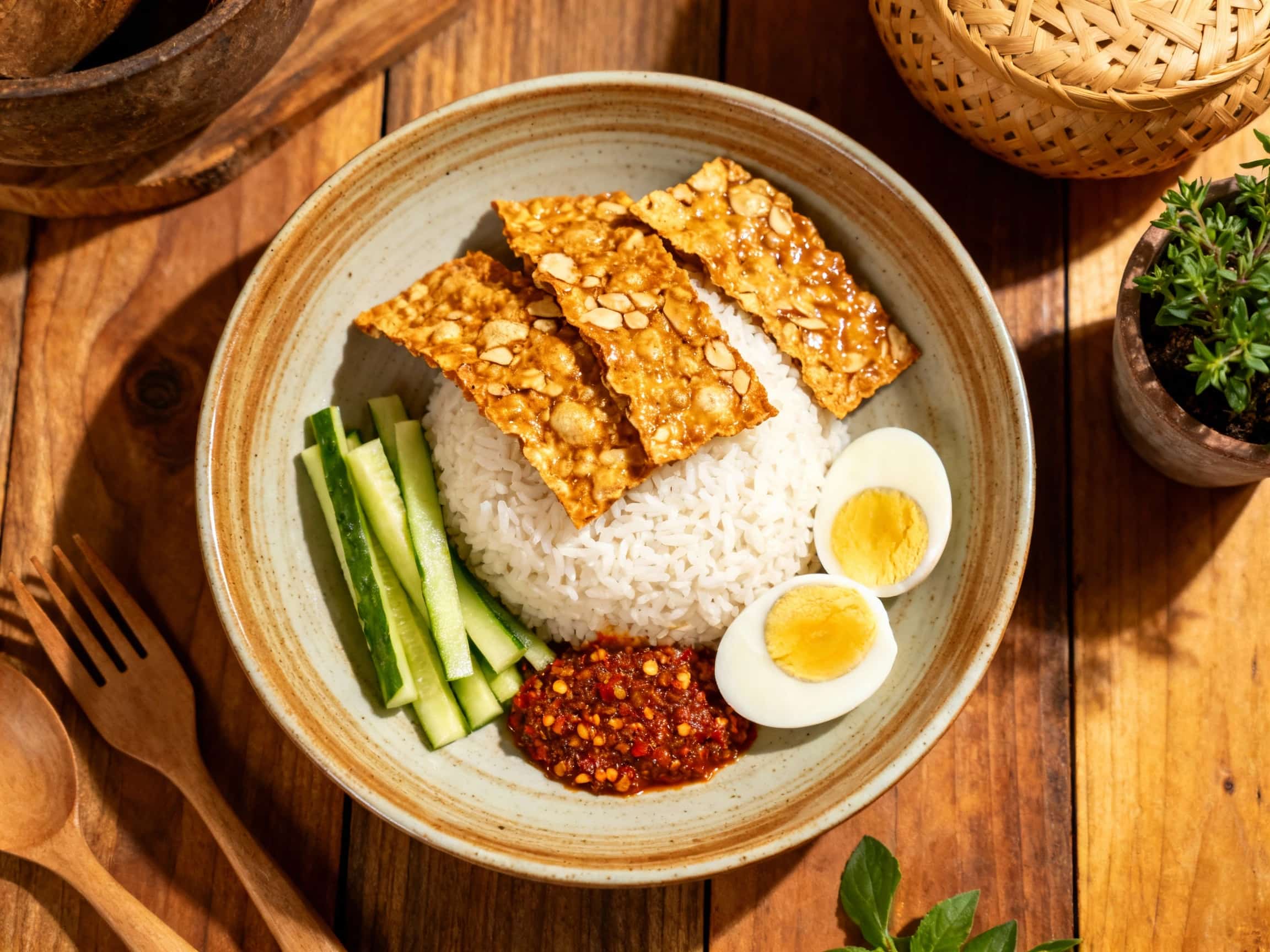
Nasi Uduk
Nasi Uduk
- Country
- Indonesia
- Region
- Jakarta
- Recipes
- 3 Recipes
Origins & Characteristics of Nasi Uduk
Nasi Uduk, meaning 'mixed rice' or 'rice cooked in oil', is a cherished Indonesian dish originating from the Betawi culture of Jakarta. Its defining characteristic is the rice, which is meticulously cooked in fragrant coconut milk, often infused with pandan leaves for an aromatic depth, and sometimes a touch of ginger and lemongrass, creating a subtly rich and flavorful base. This method imbues the rice with a creamy texture and a distinct, comforting aroma that sets it apart from plain steamed rice. The origins of Nasi Uduk are believed to be influenced by Indian culinary traditions, particularly the practice of cooking rice with spices and milk, which was later adapted by local Indonesian cooks. It evolved into a popular breakfast dish, especially in the Jakarta region, and has since become a national treasure. Nasi Uduk is rarely served alone; its appeal lies in the variety of accompaniments that are traditionally paired with it. These often include crispy fried chicken (ayam goreng), spicy sambal, fried anchovies (ikan teri), hard-boiled eggs, and tempeh or tofu. The combination of the rich rice with these diverse side dishes creates a harmonious and satisfying culinary experience. Nasi Uduk is more than just a meal; it's a symbol of Jakarta's culinary heritage and a testament to the Indonesian art of balancing complex flavors and textures. It's a dish that evokes feelings of home and tradition, enjoyed by people from all walks of life, from casual breakfast patrons to those celebrating special occasions. Its enduring popularity in Jakarta and beyond underscores its status as a fundamental element of Indonesian gastronomy.
History of Nasi Uduk
Nasi Uduk emerges as a distinct dish, influenced by Betawi culture in Jakarta
Becomes a popular breakfast staple in Jakarta and surrounding regions
Nasi Uduk is often prepared for national day celebrations and gatherings
Gains wider recognition and popularity across Indonesia and internationally