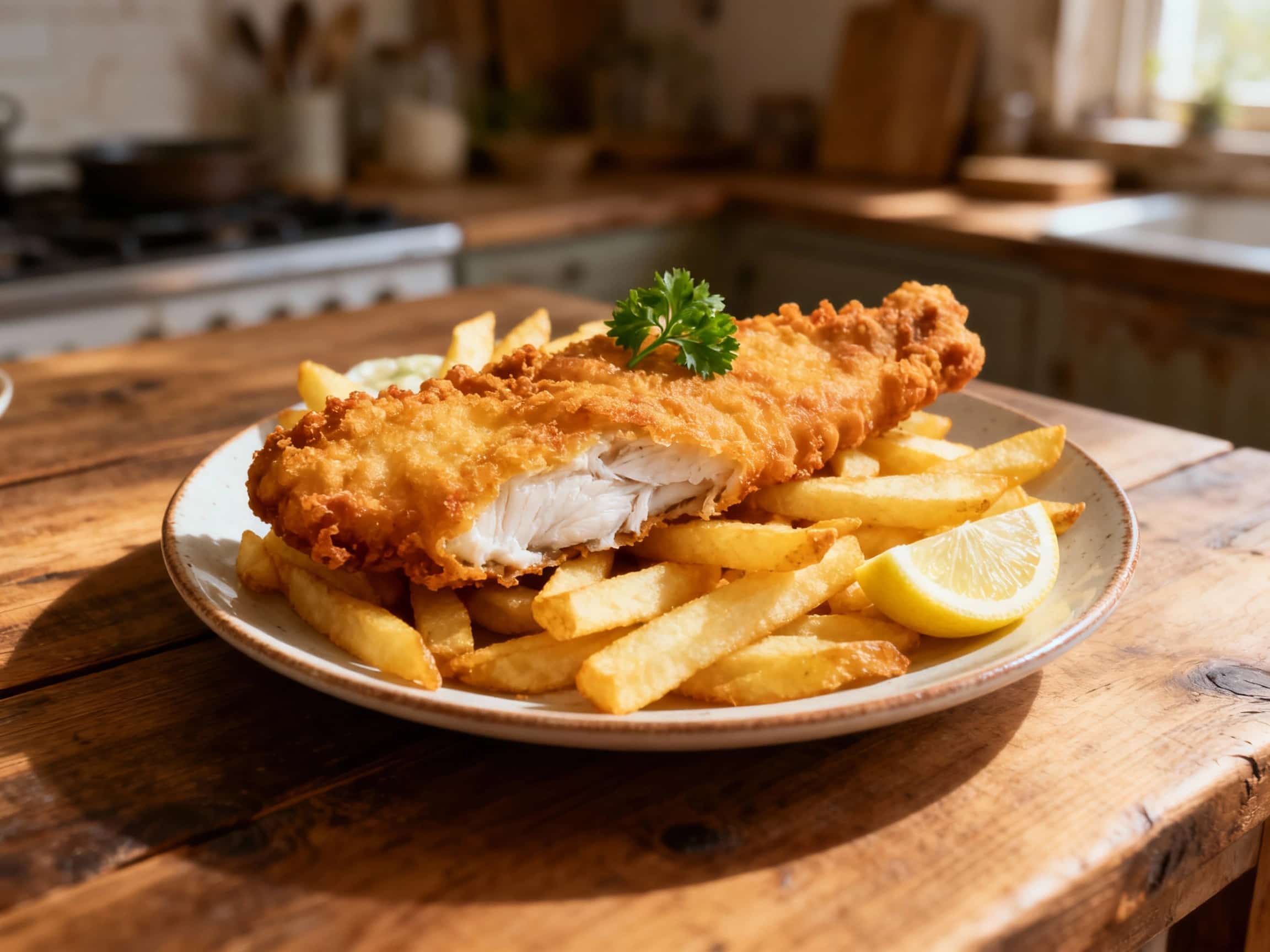
Fish and Chips
Fish and Chips
- Country
- Australia
- Region
- Coastal regions
- Recipes
- 3 Recipes
Origins & Characteristics of Fish and Chips
Fish and Chips is one of the most iconic and beloved dishes of British and Australian cuisine, representing a quintessential takeaway meal enjoyed by millions. Its origins are traced back to the mid-19th century in Britain, a time of significant industrialisation and urbanisation. Fried fish was introduced by Jewish immigrants from Portugal and Spain, who brought with them the tradition of frying fish in batter. Simultaneously, the popularity of fried potatoes, or "chips," grew in working-class communities. It is believed that the first fish and chip shops emerged around the 1860s, combining these two elements into the single, delicious dish we know and love today. These early shops served as vital social hubs, offering affordable and filling meals to the labouring masses. In Australia, fish and chips quickly became a staple, particularly in coastal regions where fresh seafood was abundant. The dish perfectly suited the Australian lifestyle, offering a convenient meal for beachgoers and families. Over time, variations have emerged, with different types of fish being used depending on local availability, and accompaniments like lemon wedges and tartare sauce becoming standard. The traditional serving method often involves wrapping the piping hot fish and chips in newspaper, a practice that harks back to its humble beginnings, though this is now less common due to hygiene concerns. Popular global chefs and food critics have often lauded fish and chips as a perfect example of how simple ingredients can be transformed into a deeply satisfying culinary experience. Iconic locations for enjoying fish and chips include seaside towns and bustling city streets, where the aroma of frying batter and potatoes fills the air. It remains a symbol of accessible, delicious, and satisfying comfort food enjoyed across generations and cultures. While its exact birthplace is debated between London and the East End Jewish community and Lancashire for the chips, its impact is undeniable. The dish's journey mirrors the evolution of fast food and its place in cultural identity, making it a persistent favourite.
History of Fish and Chips
The first fish and chip shop is believed to have opened in London, England.
Fish and chips began to spread rapidly through Britain, becoming a popular working-class meal.
The tradition of wrapping fish and chips in newspaper became common practice.
Fish and chips were introduced and gained popularity in Australia, adapting to local ingredients.
The repeal of the budget food price control in the UK led to the closure of many fish and chip shops, but the dish survived.
During World War II, fish and chip shops remained open and were immensely popular, providing affordable sustenance.
The rise of the takeaway culture cemented fish and chips as a national dish in both the UK and Australia.
The introduction of health regulations began to change serving practices, reducing the reliance on newspaper.
Efforts were made to promote sustainable fishing practices for the fish used in the dish.
Fish and chips were officially recognized as a significant part of British cultural heritage.