
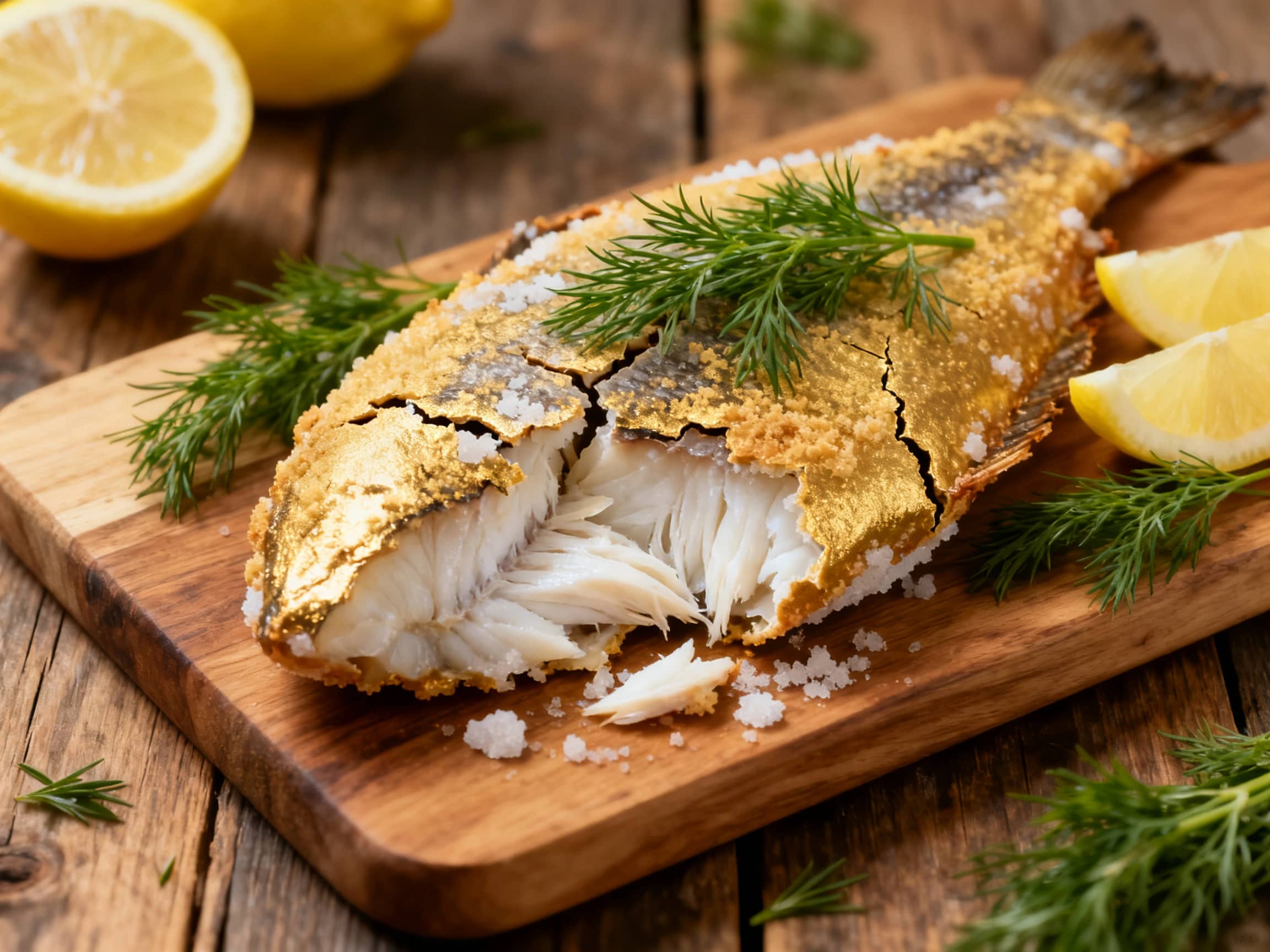
Salt-Crusted Baked Halibut with Dill and Lemon
Salt-Crusted Baked Halibut with Dill and Lemon
Unlock the secrets of ancient culinary techniques with this exquisite salt-crusted baked halibut. Originating from Mediterranean traditions, salt baking is a time-honored method of preserving and cooking that creates unbelievably tender and succulent results, making it ideal for the "Cured & Salted Foods" category. The thick crust of coarse sea salt acts as a natural oven, gently steaming the fish and locking in its delicate moisture and flavor. This process ensures the halibut emerges perfectly cooked, flaky, and imbued with a pure taste of the sea, without becoming overly salty. Bright, aromatic additions like fresh dill and zesty lemon slices are carefully nestled within the salt, infusing the fish with vibrant notes that complement its natural richness. More than just a meal, this dish offers a dramatic presentation as the hardened salt crust is ceremoniously cracked at the table, releasing fragrant steam and revealing the pristine, perfectly cooked fish within. It’s a remarkably simple yet elegant way to prepare seafood, transforming a humble fillet into a show-stopping center-piece that celebrates the art of salt-based preservation and cooking.
- Preparation time
- 20 min
- Cooking time
- 35 min
- Total time
- 55 min
- Servings
- 4
Instructions
Preparation
- 1Preheat your oven to 400°F (200°C). Line a baking sheet with parchment paper.
- 2In a large bowl, combine the coarse sea salt with the egg whites (if using) and enough water to create a mixture that resembles wet sand and holds its shape when squeezed. If not using egg whites, gradually add water until the desired consistency is achieved.
- 3Spread a layer of the salt mixture about 0.5 inches thick on the prepared baking sheet, forming a bed slightly larger than your halibut fillets.
Assembly and Baking
- 1Pat the halibut fillets very dry with paper towels. Arrange them on the salt bed, leaving space between each fillet.
- 2Top each halibut fillet with a few slices of lemon, some fresh dill, and a few slices of garlic. Sprinkle generously with freshly cracked black peppercorns.
- 3Carefully cover the halibut fillets completely with the remaining salt mixture, ensuring there are no gaps. Form a dome or seal around each fillet, making sure the salt crust is at least 0.5 to 1 inch thick over the fish.
- 4Bake for 30-35 minutes, or until an instant-read thermometer inserted through the salt crust into the thickest part of the fish registers 140-145°F (60-63°C). The salt crust will harden and turn a light golden color.
Serving
- 1Remove the baking sheet from the oven and let it rest for 5 minutes.
- 2Carefully crack open the salt crust with the back of a spoon or a small hammer. Lift away the large pieces of crust. The fish will be perfectly cooked and moist.
- 3Brush off any excess salt from the fillets before serving. Gently transfer the halibut to plates, garnished with fresh dill and extra lemon if desired. Serve immediately.
Nutrition Information
- Calories
- 250 kcal
- Protein
- 35 g
- Fat
- 10 g
- Carbs
- 2 g
| Nutrient | Per serving |
|---|---|
| Calories | 250 kcal |
| Protein | 35 g |
| Fat | 10 g |
| Carbs | 2 g |
Tips
- Presenting the entire salt-crusted fish at the table before cracking it open adds a dramatic and engaging element to your dining experience.
- Use a good quality coarse sea salt for the best flavor and crust formation. Avoid iodized table salt, as it can impart an off-flavor.