
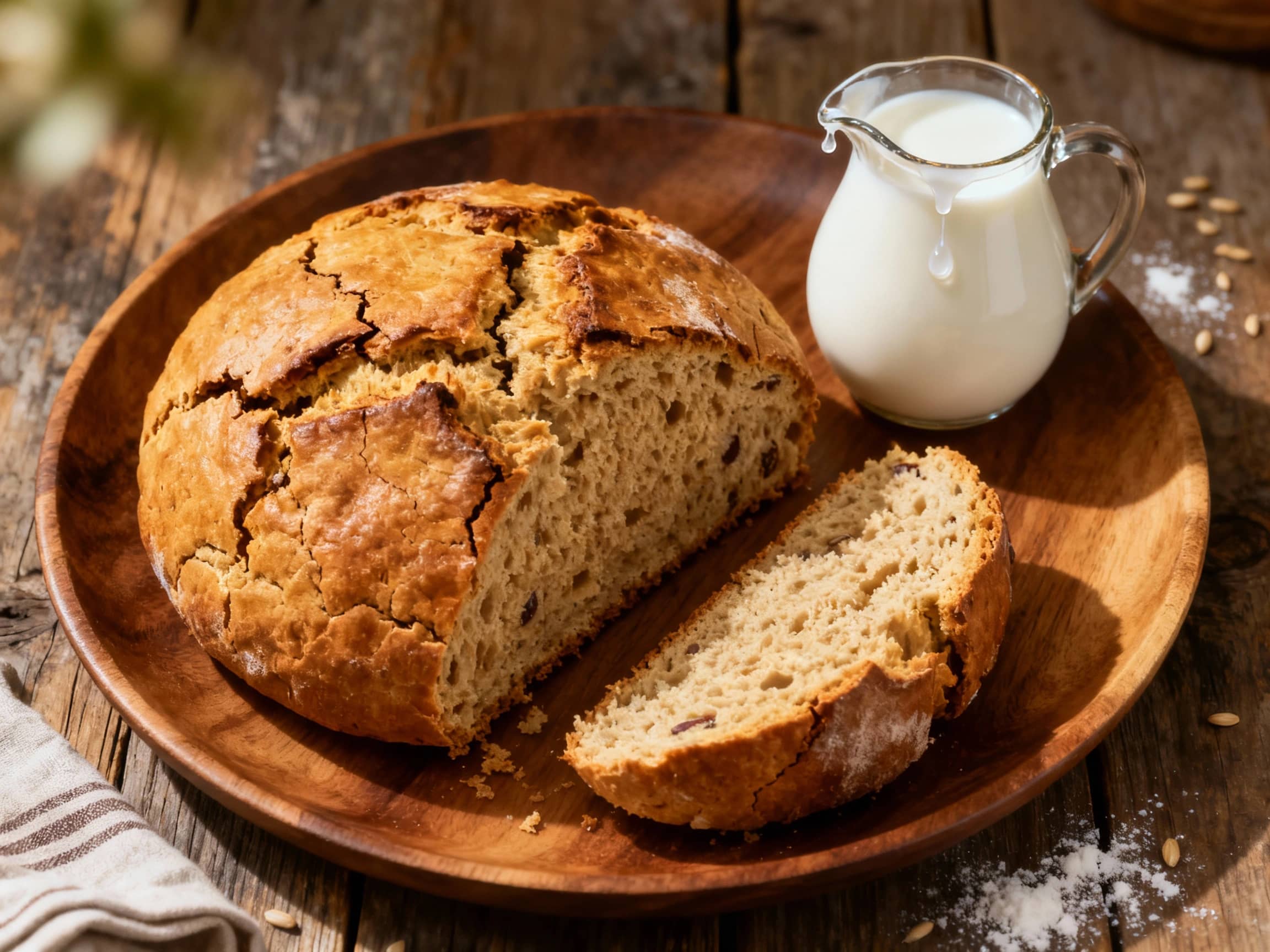
Irish Brown Soda Bread with Buttermilk
Irish Brown Soda Bread with Buttermilk
Embark on a culinary journey to the Emerald Isle with this authentic Irish Brown Soda Bread. Far more than just a simple loaf, this traditional bread is a staple in Irish cuisine, offering a taste of history and comfort. Unlike yeast breads, soda bread relies on the rapid chemical reaction between acidic buttermilk and baking soda for its rise, meaning no waiting for dough to prove – a true blessing for busy bakers! This quick bread comes together in mere minutes, baking into a wonderfully rustic loaf with a tender, wholesome crumb and a satisfyingly crisp crust. The blend of whole wheat and all-purpose flours provides a delightful texture and nutty depth, perfectly complemented by the subtly sweet, malty notes and the unique aromatic hint of caraway seeds, a classic addition that adds an extra layer of traditional flavour. Ideal for beginners and seasoned cooks alike, its forgiving nature makes it a joyous baking project. Serve warm, thickly sliced, and generously slathered with good Irish butter and preserves, or as the perfect accompaniment to a hearty beef stew or a comforting bowl of soup. This recipe celebrates the simplicity and ingenuity of traditional Irish baking, bringing a piece of Ireland's rich culinary heritage directly to your kitchen table. Discover the charm of old-world bread making with this wholesome, flavourful, and utterly satisfying brown soda bread, a cornerstone of traditional Irish baking.
- Preparation time
- 15 min
- Cooking time
- 40 min
- Total time
- 55 min
- Servings
- 12
Instructions
Preparation
- 1Preheat your oven to 400°F (200°C) and lightly flour a baking sheet or line with parchment paper. Ensure your buttermilk is at room temperature before you begin.
Mixing the Dough
- 1In a large mixing bowl, whisk together the whole wheat flour, all-purpose flour, baking soda, salt, granulated sugar, and caraway seeds (if using). Make sure all dry ingredients are thoroughly combined.
- 2Make a well in the center of the dry ingredients and pour in the buttermilk all at once.
- 3Using one hand, mix the ingredients with a light touch, drawing the flour into the liquid until just combined. Do not overmix; the dough should be soft and shaggy, not smooth.
- 4Turn the dough out onto a lightly floured surface. Gently knead for about 30 seconds to bring it together into a round loaf. Avoid excessive handling, as this can make the bread tough. The dough should still be quite sticky.
Baking
- 1Transfer the prepared dough to the floured baking sheet.
- 2Using a sharp knife, cut a deep cross into the top of the loaf, extending almost to the edges and about two-thirds of the way down into the dough. This traditional mark is said to let the 'fairies out' and helps the bread bake through evenly.
- 3Bake in the preheated oven for 35-45 minutes, or until the crust is golden brown and the loaf sounds hollow when tapped on the bottom. If the top browns too quickly, you can loosely tent it with foil.
- 4Once baked, remove the bread from the oven and transfer it to a wire rack to cool. For a softer crust, wrap the warm loaf in a clean kitchen towel while it cools.
Serving
- 1Serve warm, sliced, with butter, jam, cheese, or alongside your favorite Irish stew or soup. Enjoy the authentic taste of this traditional bread.
Nutrition Information
- Calories
- 250 kcal
- Protein
- 7 g
- Fat
- 7 g
- Carbs
- 40 g
| Nutrient | Per serving |
|---|---|
| Calories | 250 kcal |
| Protein | 7 g |
| Fat | 7 g |
| Carbs | 40 g |
Tips
- Always measure your flour correctly by either weighing it or using the spoon-and-level method to prevent a dense loaf.
- Do not overmix the dough. The less you handle it, the more tender your soda bread will be, characteristic of traditional Irish baking.
- For the best flavor and texture, serve Irish soda bread fresh and warm, ideally within a few hours of baking.