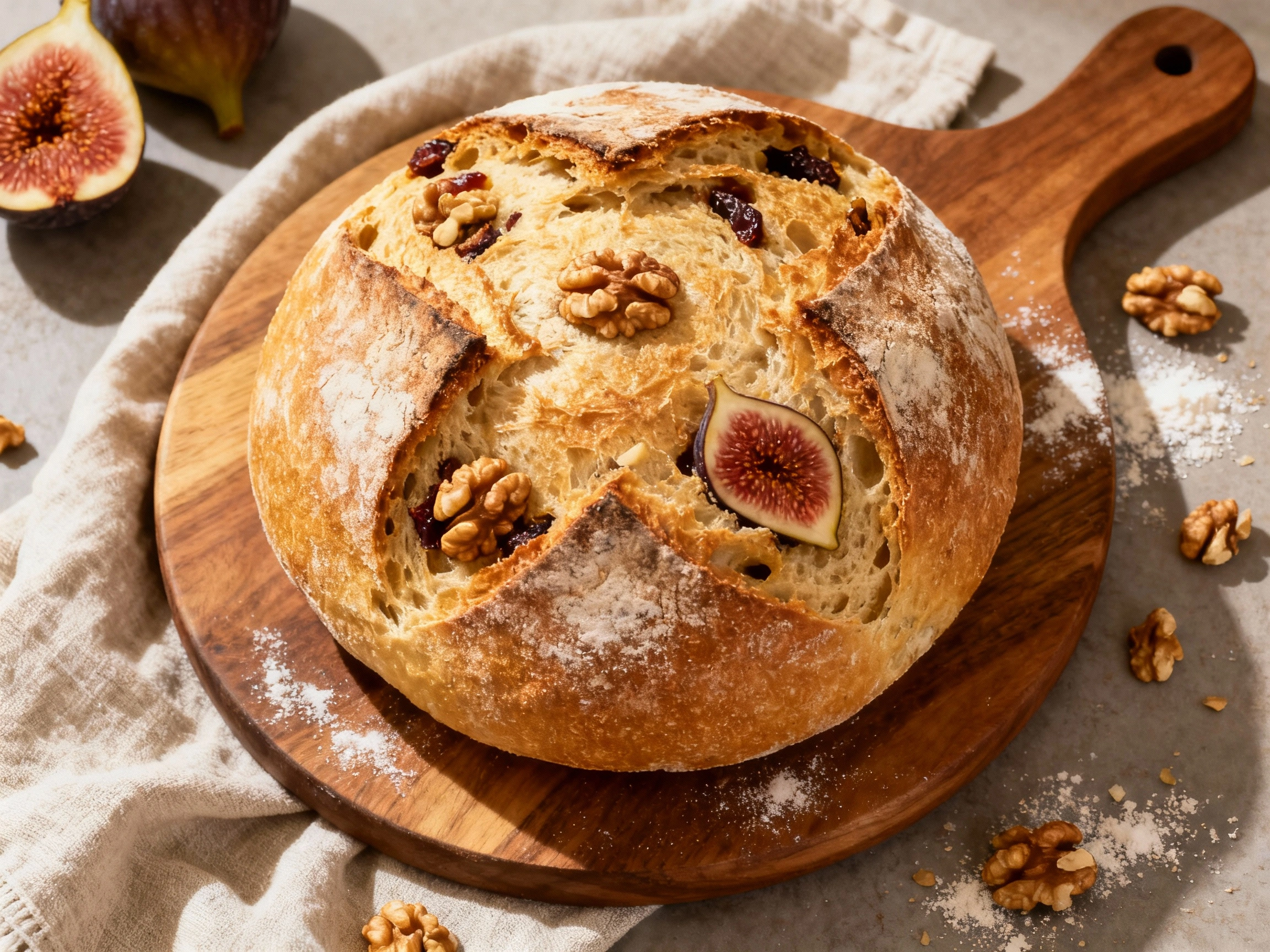
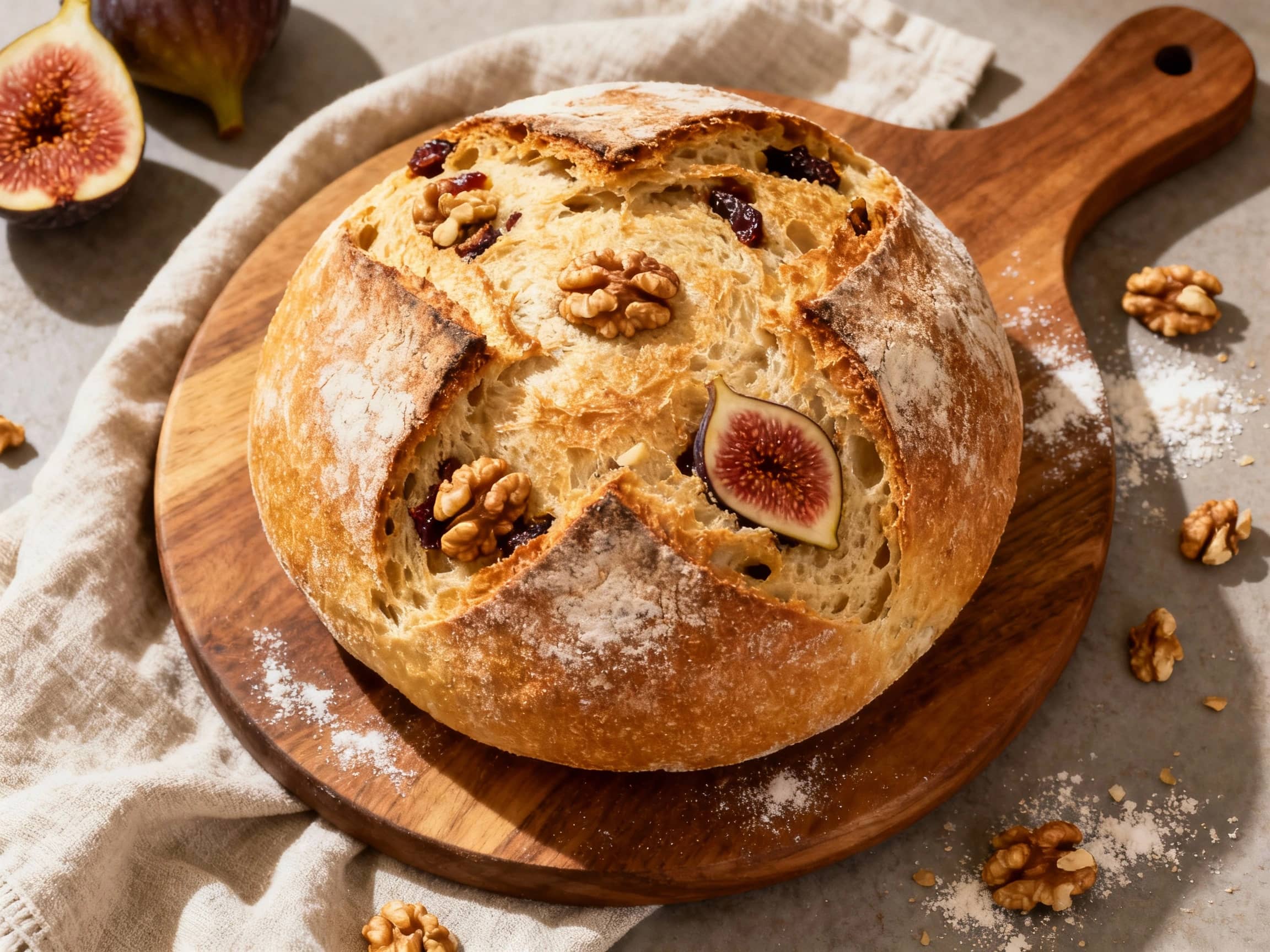
Fig and Walnut Sourdough Boule
Fig and Walnut Sourdough Boule
Experience the rich, complex flavor of slow-fermented sourdough infused with chewy dried figs and crunchy toasted walnuts, a true artisanal delight. This boule boasts a deeply caramelized, crackly crust, a tender crumb with a delightful tang from the natural fermentation process, and an aroma that fills the kitchen with warmth and comfort. It’s a perfect centerpiece for any meal, whether served simply with butter, as part of a sophisticated cheese board, or as the foundation for gourmet sandwiches. The interplay of naturally sweet figs and earthy, toasted walnuts creates a sophisticated taste and texture that elevates this bread beyond the ordinary, making it a rewarding baking project for both novice and experienced bread makers seeking to master the art of sourdough at home.
- Preparation time
- 30 min
- Cooking time
- 45 min
- Total time
- 2 hrs 27 min
- Servings
- 1
Instructions
Mixing and Fermentation
- 1In a large bowl, combine the active sourdough starter, warm water, and honey, stirring gently until the starter is mostly dissolved.
- 2Add the all-purpose flour and salt to the bowl. Mix with your hands or a Danish dough whisk until no dry streaks of flour remain and a shaggy dough forms. Cover the bowl with a damp cloth and let it rest for 30 minutes (autolyse).
- 3After the rest, perform four sets of stretch and folds, spaced 30 minutes apart. For each set, wet your hand, gently grab one side of the dough, stretch it upwards, and fold it over to the opposite side of the bowl. Rotate the bowl a quarter turn and repeat 3-4 times until all sides are folded. Cover between sets.
- 4During the second or third set of stretch and folds, gently incorporate the chopped dried figs and toasted walnuts into the dough, ensuring even distribution.
- 5After the final stretch and fold, cover the bowl and let the dough bulk ferment at room temperature (around 70-75°F / 21-24°C) for 3-4 hours, or until it has increased in volume by about 30-50% and feels airy.
Shaping and Proofing
- 1Lightly flour your work surface. Gently turn the dough out of the bowl. Shape it into a round boule by gently pulling the edges towards the center to create tension on the top surface.
- 2Place the shaped dough, seam-side up, into a lightly floured banneton or an alternative proofing basket lined with a floured towel. Cover with plastic wrap or a shower cap.
- 3Refrigerate the dough for 12-18 hours for a long, cold proof. This develops deeper flavor and makes the dough easier to handle.
Baking
- 1Preheat your oven to 450°F (232°C) with a Dutch oven inside for at least 45-60 minutes.
- 2Carefully remove the hot Dutch oven from the oven. Gently invert the cold dough into the hot Dutch oven. Score the top of the dough with a sharp razor blade or lame, making a single deep slash or a decorative pattern.
- 3Cover the Dutch oven and bake for 25 minutes.
- 4Remove the lid and continue baking for another 20-25 minutes, or until the crust is deeply golden brown and the internal temperature reaches 200-210°F (93-99°C).
- 5Carefully remove the bread from the Dutch oven and transfer it to a wire rack to cool completely for at least 1-2 hours before slicing. This is crucial for the crumb structure.
Nutrition Information
- Calories
- 350 kcal
- Protein
- 10 g
- Fat
- 12 g
- Carbs
- 50 g
| Nutrient | Per serving |
|---|---|
| Calories | 350 kcal |
| Protein | 10 g |
| Fat | 12 g |
| Carbs | 50 g |
Tips
- Ensure your sourdough starter is very active and bubbly; a strong starter is key for good oven spring and a light crumb.
- Don't rush the cooling process; slicing warm sourdough can lead to a gummy texture. Patience will reward you with the best crumb.
- This bread is delicious with butter, cheese, or even toasted for a unique breakfast. It also makes incredible gourmet sandwiches.