
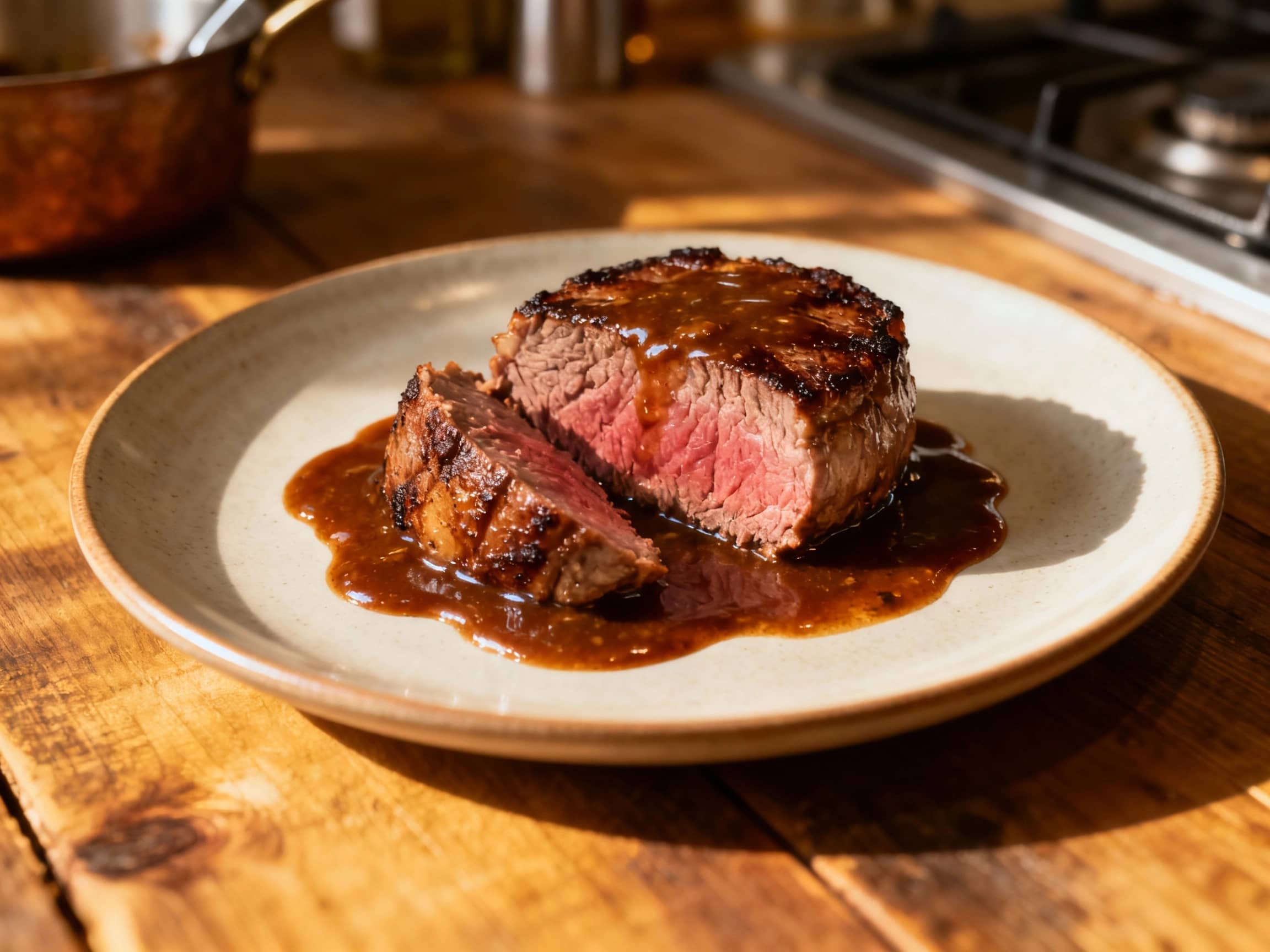
Classic Filet Mignon with Rich Bordelaise Sauce
Classic Filet Mignon with Rich Bordelaise Sauce
Indulge in a masterpiece of French haute cuisine, a perfectly executed Filet Mignon draped in a luxurious, deeply savory Bordelaise sauce. This recipe meticulously guides you through searing a tender cut of beef to a precise medium-rare, creating a flavorful crust while maintaining a succulent interior. The accompanying Bordelaise sauce, a reduction of robust red wine, rich beef stock, aromatic shallots, and the quintessential addition of bone marrow, epitomizes classic French technique, offering umami depth and a silky texture. Served traditionally with creamy potato purée and crisp blanched asparagus, this dish transforms any meal into a gourmet event, perfect for special occasions or an elevated home dining experience that truly celebrates culinary artistry.
- Preparation time
- 30 min
- Cooking time
- 1 hr 30 min
- Total time
- 2 hrs
- Servings
- 4
Instructions
Prepare the Bordelaise Sauce
- 1In a medium saucepan, melt 1 tablespoon of butter over medium heat. Add the minced shallots and cook until softened, about 3-5 minutes. Add the minced garlic and cook for another minute until fragrant.
- 2Pour in the red wine and bring to a simmer. Reduce the wine by half, scraping up any browned bits from the bottom of the pan. This will take about 10-15 minutes.
- 3Add the beef stock, dried thyme, and bay leaf. Bring the mixture to a gentle boil, then reduce heat to low and simmer, uncovered, for 60-75 minutes, or until the sauce has reduced by two-thirds and is thick enough to lightly coat the back of a spoon. Skim off any impurities that rise to the surface periodically.
- 4Strain the sauce through a fine-mesh sieve into a clean saucepan, pressing on the solids to extract all liquid. Discard the solids. Stir in the roasted bone marrow, if using, until it melts into the sauce.
- 5Keep the sauce warm over very low heat. Just before serving, whisk in the remaining 2 tablespoons of cold butter, one cube at a time, until the sauce is glossy and emulsified. Season with salt and freshly ground black pepper to taste. Do not boil once butter is added.
Cook the Filet Mignon
- 1Preheat your oven to 400°F (200°C). Pat the filet mignon dry with paper towels and season generously with coarse sea salt and freshly ground black pepper on all sides.
- 2Heat olive oil in a heavy-bottomed, oven-safe skillet (preferably cast iron) over high heat until shimmering and almost smoking.
- 3Carefully place the seasoned filets in the hot skillet. Sear undisturbed for 2-3 minutes per side until a deep brown crust forms. Reduce heat to medium-high if browning too quickly.
- 4Reduce heat to medium. Add butter, crushed garlic, rosemary, and thyme sprigs to the skillet. Tilt the pan and spoon the melted butter and aromatics over the steaks continuously for 1-2 minutes to baste them.
- 5Transfer the skillet to the preheated oven. Roast for 4-6 minutes for medium-rare (internal temperature of 130-135°F / 54-57°C), or longer for desired doneness. Use a meat thermometer for accuracy.
- 6Remove the steaks from the oven and transfer them to a carving board or plate. Tent loosely with foil and let them rest for at least 5-10 minutes. This allows the juices to redistribute, ensuring a tender and flavorful steak.
Assemble and Serve
- 1While the steaks are resting and sauce is finishing, lightly blanch asparagus in salted boiling water for 2-3 minutes until tender-crisp. Prepare potato purée as desired.
- 2Slice the rested filet mignon if desired, or serve whole. Arrange on pre-warmed plates with potato purée and blanched asparagus.
- 3Generously spoon the rich Bordelaise sauce over the filet mignon. Serve immediately.
Nutrition Information
- Calories
- 750 kcal
- Protein
- 55 g
- Fat
- 45 g
- Carbs
- 25 g
| Nutrient | Per serving |
|---|---|
| Calories | 750 kcal |
| Protein | 55 g |
| Fat | 45 g |
| Carbs | 25 g |
Tips
- For the Bordelaise sauce, a slow, patient reduction is crucial for developing deep, concentrated flavors. Do not rush this step.
- Ensure your filet mignon is well-dried before searing to achieve a superior, crispy crust. Moisture inhibits browning.
- Resting the steak is non-negotiable! It prevents valuable juices from escaping when cut, keeping the meat moist and tender.