
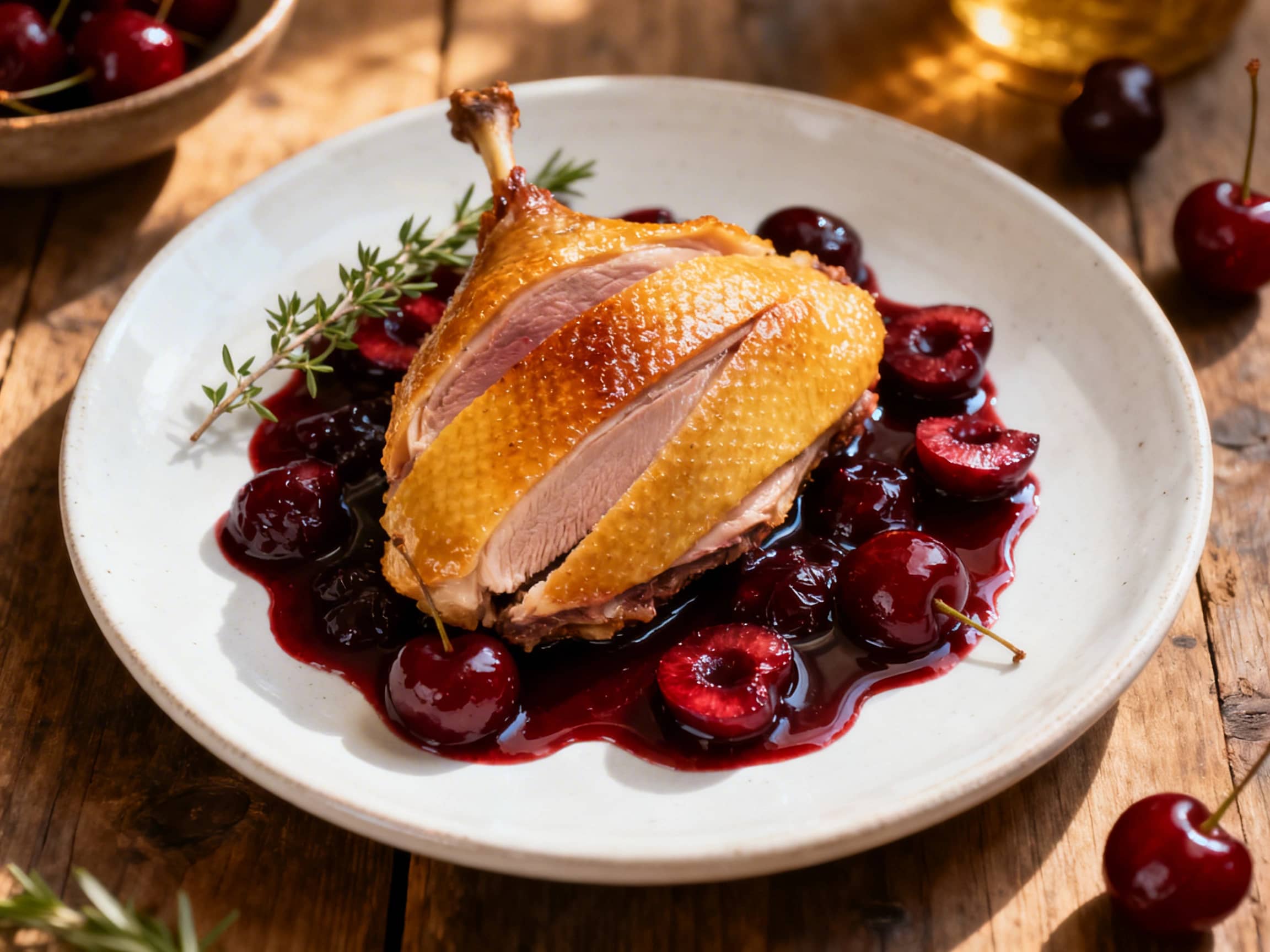
Classic Duck Sous Vide with Cherry Gastrique
Classic Duck Sous Vide with Cherry Gastrique
Embark on a culinary journey to the heart of French haute cuisine with this exemplary Classic Duck Sous Vide. This dish, a harmonious blend of traditional flavors and modern technique, transforms humble duck breast into a veritable masterpiece. Sous vide, meaning "under vacuum" in French, is a precise cooking method that guarantees unparalleled tenderness and an even cook throughout the duck, preserving its natural juices and rich flavor. The expertly rendered, crispy skin provides a delightful textural contrast to the succulent interior. The accompanying cherry gastrique, a piquant and sweet reduction sauce, is a classic accompaniment that cuts through the richness of the duck with its vibrant acidity and fruity notes, demonstrating classic French flavor pairing. Perfect for a sophisticated dinner party or a special occasion when you desire to showcase an elevated cooking prowess. This recipe truly embodies the elegance and attention to detail characteristic of Haute Cuisine Classics, offering a restaurant-quality experience in the comfort of your home. Prepare to impress your guests and awaken your palate with every exquisite bite of this stunning duck preparation.
- Preparation time
- 25 min
- Cooking time
- 2 hrs
- Total time
- 2 hrs 25 min
- Servings
- 2
Instructions
Sous Vide Duck Breast
- 1Preheat your sous vide water bath to 57°C (135°F) for medium-rare, or 60°C (140°F) for medium.
- 2Pat the duck breasts dry with paper towels. Season generously with salt and freshly ground pepper. Place a sprig of thyme on each duck breast.
- 3Place the seasoned duck breasts in a vacuum-sealable bag, ensuring they are in a single layer. Seal the bag, removing as much air as possible.
- 4Submerge the sealed bag in the preheated water bath and cook for 2 hours. This allows the fat to render beautifully and the meat to tenderize.
Prepare Cherry Gastrique
- 1While the duck is cooking, prepare the cherry gastrique. In a small saucepan, melt the duck fat over medium heat. Add the minced shallots and sauté until softened and translucent, about 3-5 minutes.
- 2Add the pitted cherries, red wine vinegar, and sugar to the saucepan. Bring to a simmer, then reduce the heat and let it gently reduce by about half, until it reaches a syrupy consistency. This may take 15-20 minutes.
- 3Season the gastrique with a pinch of salt and pepper to taste. Keep warm over very low heat.
Searing and Serving
- 1Once the duck breasts have finished cooking in the sous vide bath, remove them from the bag and pat them very dry with paper towels. Discard the thyme sprigs.
- 2Heat a heavy-bottomed skillet (preferably cast iron) over medium-high heat. Place the duck breasts skin-side down in the cold skillet. Do not add additional fat, as the duck fat will render out.
- 3Sear the duck skin-side down for 8-10 minutes, pressing gently with a spatula to ensure even contact, until the skin is deeply golden, crisp, and most of the fat has rendered. Pour off excess fat occasionally.
- 4Flip the duck breasts and sear for just 1-2 minutes on the meat side to develop a slight crust. The interior is already perfectly cooked from the sous vide.
- 5Remove the duck breasts from the pan and let them rest on a cutting board for 5 minutes before slicing. This allows the juices to redistribute.
- 6Slice the duck breasts against the grain into thick pieces. Arrange on warmed plates and spoon a generous amount of cherry gastrique over the duck. Serve immediately.
Nutrition Information
- Calories
- 650 kcal
- Protein
- 45 g
- Fat
- 40 g
- Carbs
- 25 g
| Nutrient | Per serving |
|---|---|
| Calories | 650 kcal |
| Protein | 45 g |
| Fat | 40 g |
| Carbs | 25 g |
Tips
- Ensure duck skin is properly scored in a crosshatch pattern without cutting into the meat, this helps render fat evenly.
- For perfectly crisp skin, start searing the duck in a cold pan, skin-side down, allowing the fat to slowly render out.
- Pair this rich dish with a light, peppery Pinot Noir or a dry sparkling Rosé to complement the duck and gastrique.