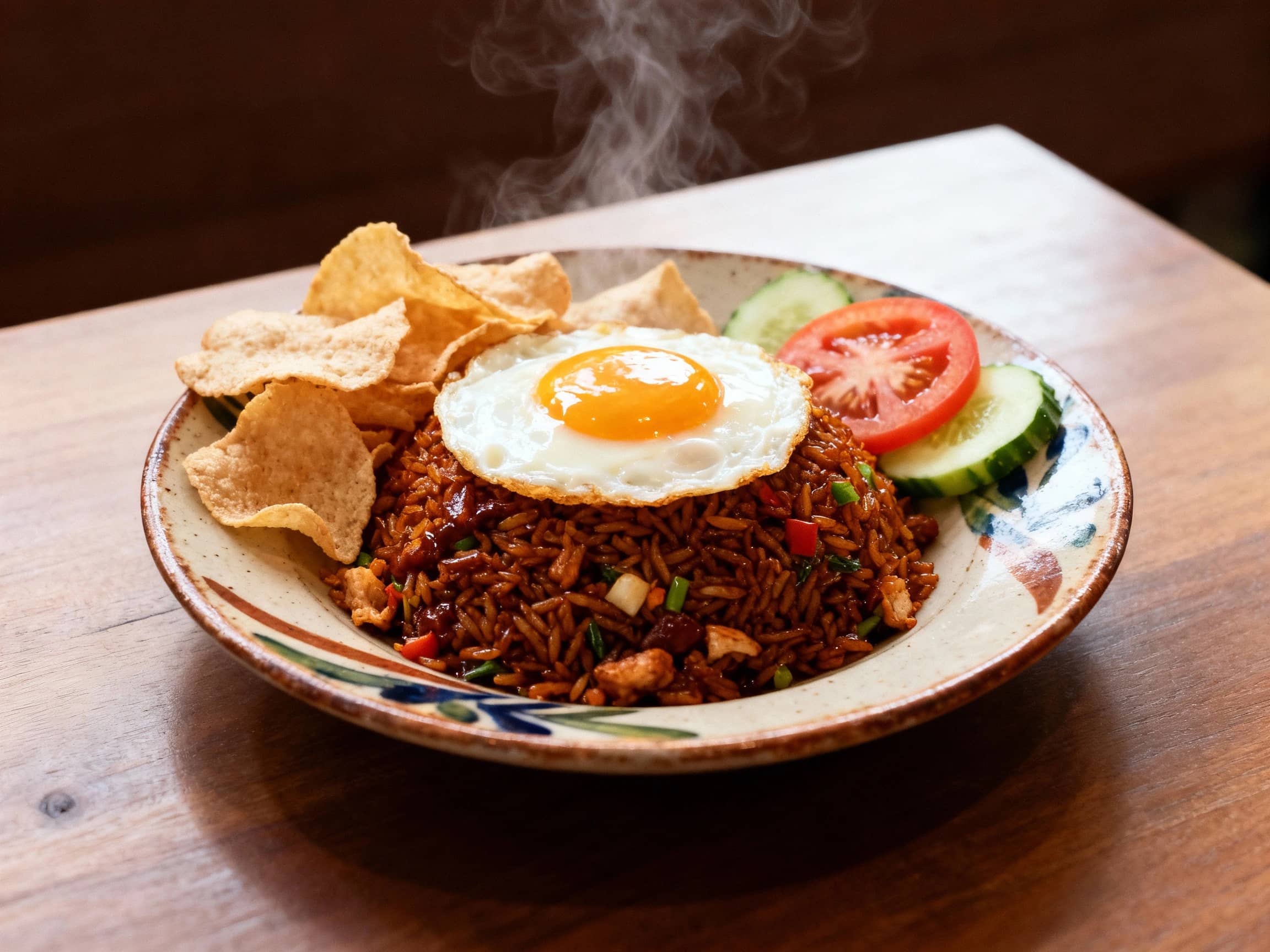
Nasi Goreng
Nasi Goreng
- Country
- Indonesia
- Region
- Java
- Recipes
- 3 Recipes
Origins & Characteristics of Nasi Goreng
Nasi Goreng, which translates to 'fried rice' in Indonesian, is a national dish of Indonesia, revered for its rich history and ubiquitous presence across the archipelago. While its origins are ancient, likely influenced by Chinese traders who introduced rice cultivation and stir-frying techniques to Southeast Asia centuries ago, Nasi Goreng evolved into its distinct Indonesian form over time. The dish is a staple, found everywhere from street food stalls to high-end restaurants, and is often considered a comfort food, a celebratory dish, and a quick meal all in one. Its adaptability is key to its enduring popularity; while the core is fried rice seasoned with kecap manis (sweet soy sauce), chili, and often terasi (shrimp paste), variations abound. The dish’s cultural significance is so profound that it is often the first dish tourists seek out and locals proudly serve. Influential figures and everyday families alike have contributed to its evolution, making it a true reflection of Indonesian culinary identity. The dish embodies the spirit of resourcefulness, transforming leftover rice into a flavorful and satisfying meal. Places like Java, with its diverse culinary landscape, are often cited as a birthplace or a significant region for its development. Its presence is so widespread that it has become an ambassador for Indonesian cuisine on the global stage.
History of Nasi Goreng
Introduction of rice cultivation to Southeast Asia
Chinese traders likely introduce stir-frying techniques
Kecap manis (sweet soy sauce) becomes widely available, influencing flavor profiles
Nasi Goreng is recognized as a significant Indonesian dish post-independence
Became a popular staple in Indonesian households and street food scene
Voted as the second most delicious dish in the world in a CNN poll