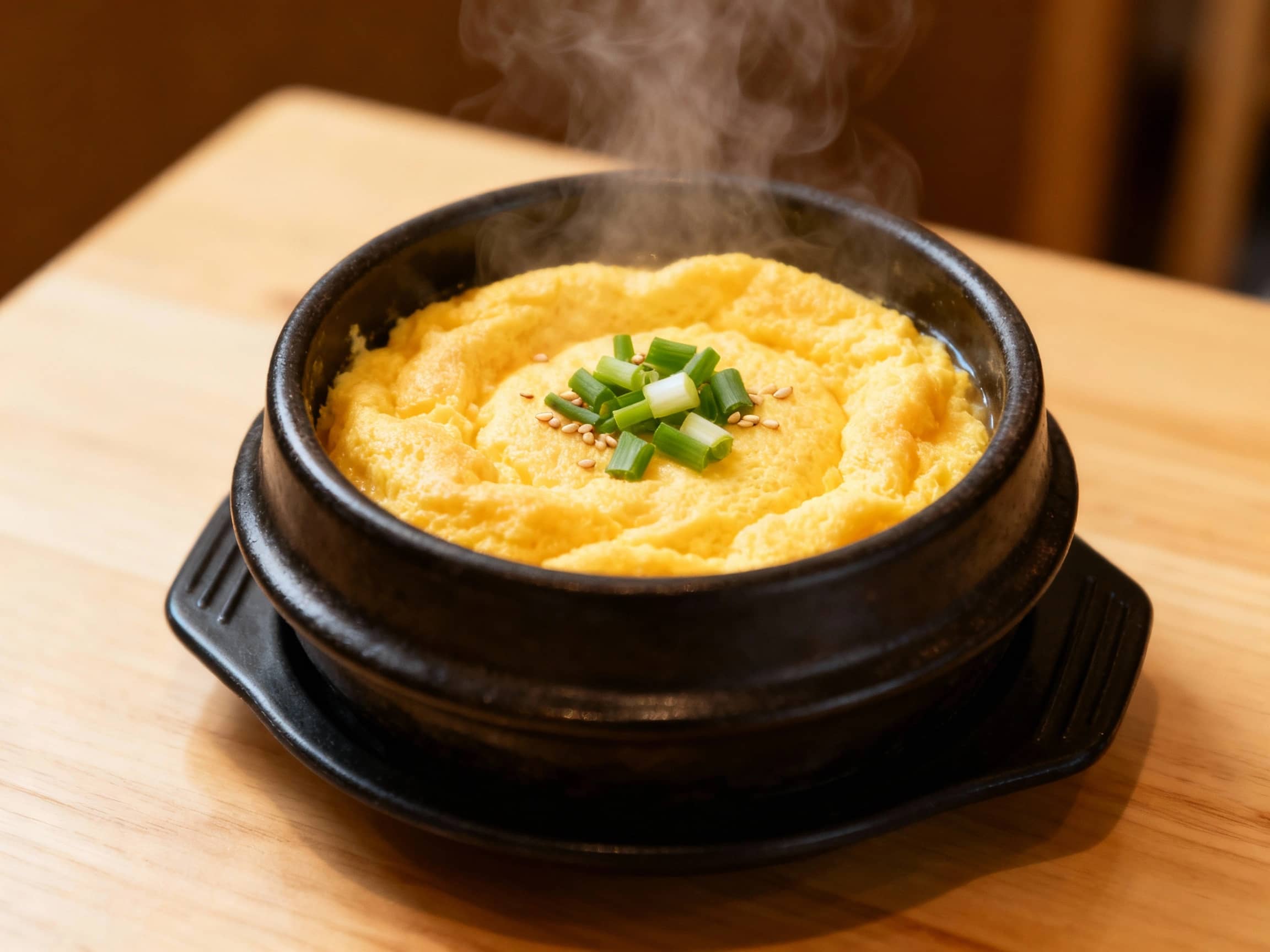
Gyeran Jjim
계란찜
- Country
- Korea
- Region
- Not specified
- Recipes
- 0 Recipes
Origins & Characteristics of Gyeran Jjim
Gyeran Jjim, the Korean steamed egg custard, is a humble yet deeply comforting dish that holds a significant place in Korean home cooking. Its origins are deeply rooted in the simple, resourceful culinary traditions of Korea, where eggs, a readily available source of protein, were transformed into a light and fluffy side dish or a versatile addition to any meal. While specific historical dates for its invention are scarce, steamed egg dishes have been a part of East Asian cuisine for centuries, with Gyeran Jjim evolving uniquely within Korean culinary practices. Unlike its Japanese counterpart, Chawanmushi, Gyeran Jjim typically uses a more rustic preparation method, often steamed directly over a burner or in a traditional earthenware pot (tteokbaegi) nestled within a larger pot of boiling water. This method contributes to its characteristic airy, often puffed-up texture and sometimes a slightly browned, custardy bottom. It's celebrated for its simplicity, requiring minimal ingredients—eggs, broth (often anchovy or kelp broth), and sometimes a touch of scallion or carrot. Its mild, savory flavor and gentle texture make it a perfect accompaniment to spicier Korean main courses, acting as a soothing palate cleanser. Gyeran Jjim is commonly prepared as banchan (side dish) and is a beloved dish for children and adults alike, representing the warmth and care found in Korean home-cooked meals.
History of Gyeran Jjim
Early forms of steamed egg dishes are documented in East Asian culinary texts, influencing later Korean preparations.
Steamed egg preparations similar to Gyeran Jjim became a common and accessible dish in Korean households, served daily as a side dish.
Classic Gyeran Jjim recipes and variations
0 recipes foundWe'll add related recipes for this dish soon.