Flaki
Flaki
- Country
- Poland
- Region
- Not specified
- Recipes
- 3 Recipes
Origins & Characteristics of Flaki
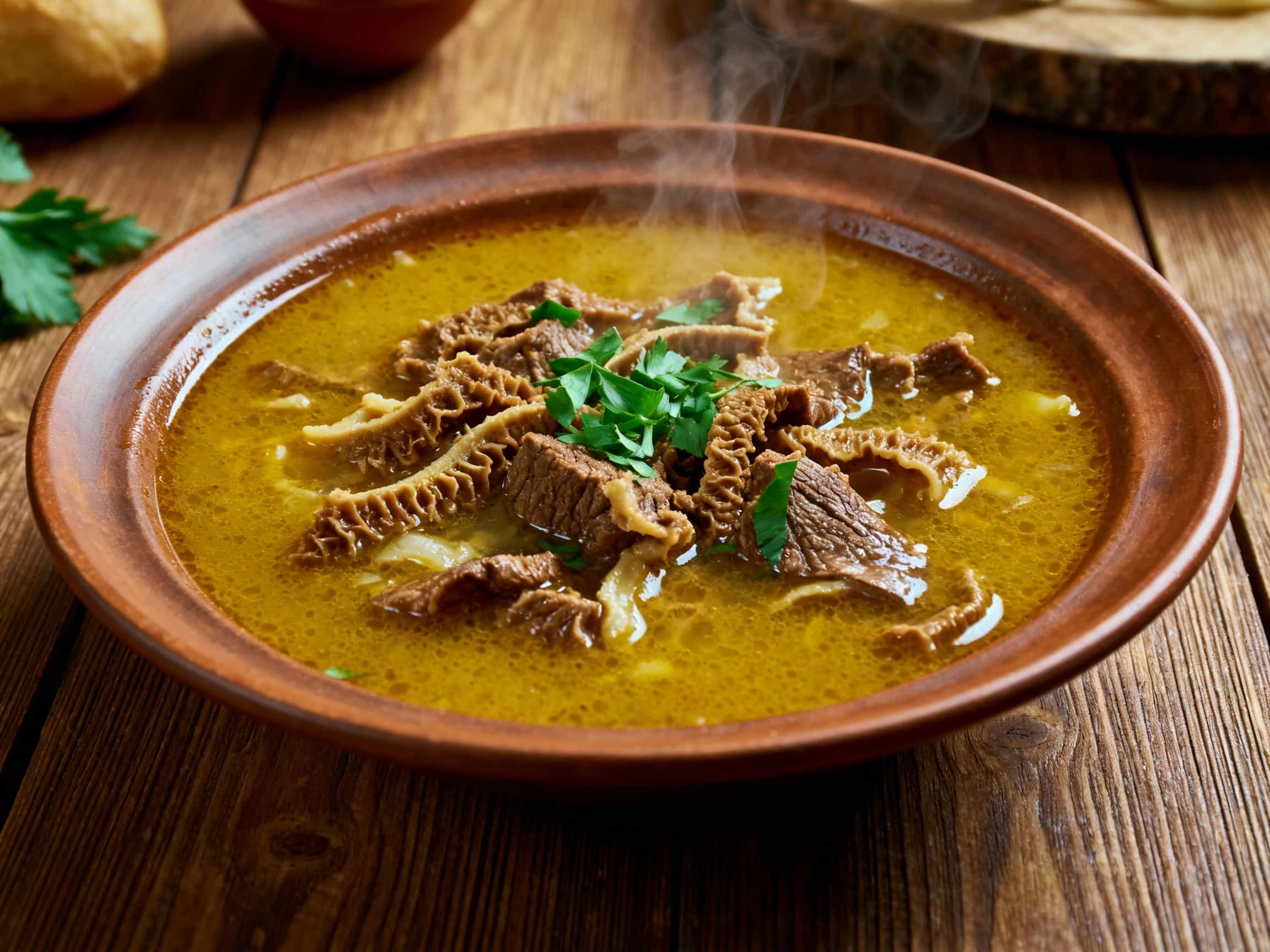
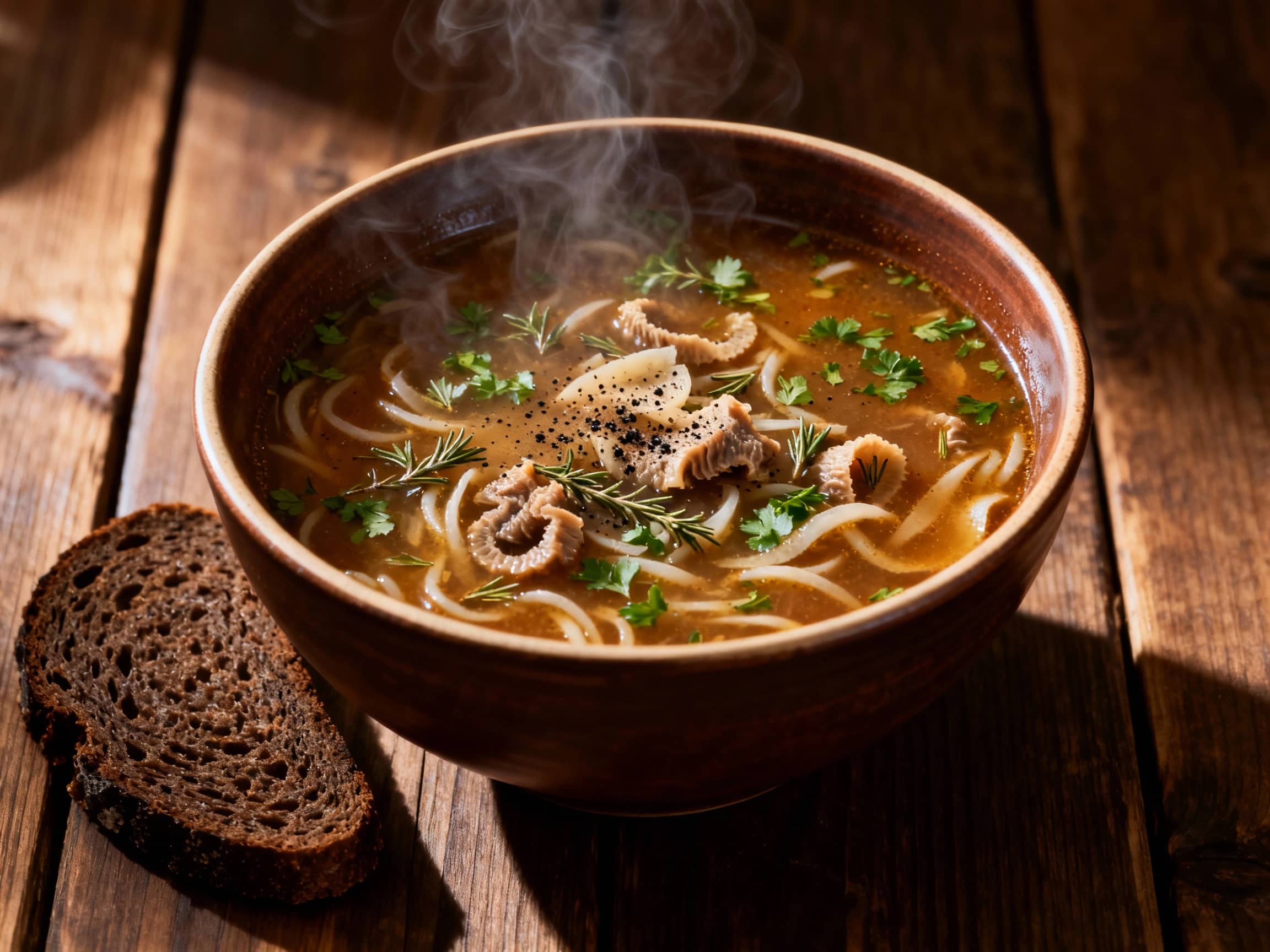
Flaki, a deeply savory and robust soup, is a cornerstone of Polish cuisine, celebrated for its unique texture and rich, satisfying flavor. Made primarily from beef tripe, which is meticulously cleaned, simmered, and then thinly sliced, flaki offers a culinary experience that appeals to those who appreciate traditional, hearty fare. The soup's origins are humble, rooted in the necessity of utilizing every part of an animal, a practice common in peasant cooking throughout Europe for centuries. By the Middle Ages, tripe soup variations were known across the continent, and in Poland, it evolved into the distinct dish known today. Its name, 'flaki,' directly translates to 'guts' or 'entrails,' reflecting its primary ingredient with unpretentious honesty. The soup is typically slow-cooked with a mirepoix of vegetables such as carrots, parsnips, and celery, and infused with a warming blend of spices, most notably marjoram and allspice, and sometimes a hint of nutmeg. A touch of tomato paste or purée adds depth and a subtle sweetness. Flaki is often considered a 'poor man's dish' but has transcended its humble beginnings to become a beloved specialty in restaurants and homes alike, particularly popular as a starter or a hearty meal on a cold day. It is frequently served during major holidays and celebrations, signifying a connection to ancestral culinary practices. Its distinct aroma and chewy texture are defining characteristics, making it a memorable and cherished part of Polish gastronomy.
History of Flaki
Tripe stews and soups were common peasant dishes across a range of European countries.
Early forms of 'Flaki' are likely prepared in Polish households, emphasizing nose-to-tail cooking.
Slightly more refined recipes for tripe soup begin to emerge in Polish culinary traditions.
Marjoram and other warming spices become characteristic flavoring agents for Polish Flaki.
Flaki gains popularity as a hearty, accessible dish served in taverns and homes.
Flaki is recognized as a staple of traditional Polish cuisine, often featured at celebrations.
A famous Polish cookbook features a definitive recipe for Flaki emphasizing slow simmering.
Modern chefs explore variations of Flaki, sometimes presented in more gourmet styles.